
Bleeding After Intercourse Is It a Sign of a Bigger Problem
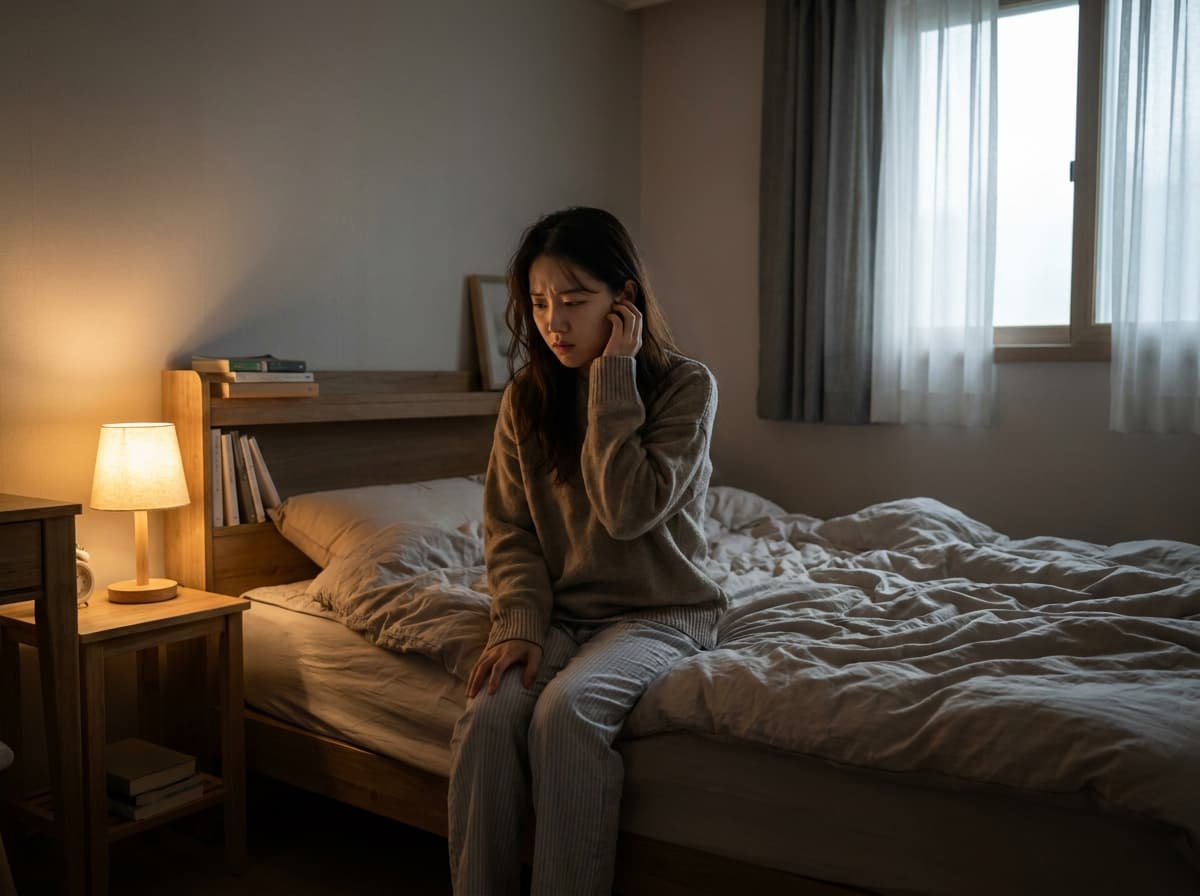
Hello. This is Dalimchae Korean Medicine Clinic. # I keep seeing blood after intercourse: I thought it would be okay, but could it be a signal of a bigger problem? When you suddenly see red blood on your underwear or toilet paper after an intimate moment with a loved one, many women will not be able to hide their embarrassment and anxiety. You might even spend sleepless nights thinking, 'Could it be a serious illness?' or 'Is there something wrong with me?' At first, you try to brush it off as nothing, but as this phenomenon repeats, your anxiety inevitably grows. 💡 **[Key Answer]** **3 most common causes of "seeing blood after intercourse":** ① Cervicitis or erosion / ② Cervical and endometrial polyps / ③ Vaginal dryness due to hormonal imbalance Dalimchae Korean Medicine Clinic Songdo Branch creates health without recurrence by fundamentally recovering the uterine environment and regaining the body's balance through **constitutional improvement**. ## Why does 'blood after intercourse' occur? Unexpectedly common causes Postcoital bleeding (PCB) refers to bleeding that occurs during or after sexual intercourse, independent of menstruation. It is a symptom experienced by more women than one might think, but the causes are very diverse, and most are benign conditions that do not require much concern. One of the most common causes is **inflammation or erosion of the cervix**. The cervix is the part that connects the vagina and the uterus and reacts sensitively to physical stimuli. In a state of cervicitis, vaginitis, or 'erosion' where the surface of the cervix is worn away, bleeding can easily occur even with minor friction. In particular, chronic inflammation can weaken cervical cells, making them prone to bleeding. Next, **polyps in the cervix or endometrium** can be the cause. These are small benign tumors that grow in the uterine lining or cervix, and because they are rich in blood vessels, bleeding can easily occur due to physical stimulus during intercourse. If there are polyps, you may experience breakthrough bleeding in daily life as well as post-intercourse bleeding. Also, **vaginal dryness due to hormonal imbalance** is a major cause. When the estrogen hormone is insufficient, the vaginal mucosa becomes thin and dry, making it easy for wounds and bleeding to occur even with minor friction. This is especially common in menopausal women, but it can also appear in younger women due to stress or excessive dieting. Other causes include early pregnancy, endometriosis, and uterine fibroids, and although rare, it can also be a signal of serious diseases such as cervical cancer or cervical dysplasia, so accurate diagnosis is important. ## Is it a temporary problem? Or a red light from the body? Postcoital bleeding is a relatively common symptom, experienced by about 0.7~9.0% of women of childbearing age. According to a report by the Tarney and Han research team published in 'Obstetrics and Gynecology International' in 2014, the cause for the majority of patients with postcoital bleeding was found to be benign diseases such as cervicitis, cervical polyps, and cervical ectropion. The same study reported that in cases where the cause was not found, postcoital bleeding spontaneously resolved within 2 years in about 51% of patients. Another study published in 'CMAJ' in 2023 showed that about 60% of postcoital bleeding without a specified cause improved naturally within 6 months. However, if bleeding is repeated, increases in amount, or is accompanied by pain or abnormal discharge, it may not be a simple problem. In particular, about 3.0~5.5% of cervical cancer patients complain of postcoital bleeding, and it is known to appear in 6.8~17.8% of cervical dysplasia (CIN) cases. According to a systematic literature review by Shapley et al. published in the 'British Journal of General Practice' in 2006, the risk of developing cervical cancer in women experiencing postcoital bleeding in the community varies by age, but in women aged 45-54, it can appear in about 1 in 2,400 people. Therefore, even one-time bleeding should not be ignored, and especially if symptoms are repeated, it is important to identify the exact cause through a medical professional's examination. ## Fundamental causes of 'bleeding after intercourse' from a Korean Medical perspective At Dalimchae Korean Medicine Clinic Songdo Branch, we do not see 'blood after intercourse' as just a local problem. We believe that physical causes such as cervical inflammation, erosion, and polyps also occur as the overall balance of the body is broken. This belongs to the category of 'breakthrough bleeding' or 'Bung-ru (崩漏)' in Korean Medicine and is interpreted as a symptom that appears when the uterine environment weakens and hormonal imbalance is caused by blood stasis (瘀血), taxation (虛勞), deficiency of Qi and Blood, and damp-heat (濕熱). In particular, the health of female reproductive organs such as the uterus and ovaries is closely related to the systemic circulation of Qi and Blood and the autonomic nervous system. When the balance of the autonomic nervous system is broken due to stress, irregular lifestyle habits, and overwork, it hinders blood flow to the uterus and lowers immunity, creating a body condition vulnerable to inflammation. In this environment, bleeding can occur easily even with minor stimuli, or symptoms can become chronic as recovery slows down. Dalimchae Korean Medicine Clinic Songdo Branch comprehensively identifies these signals from the body and focuses on managing the hidden root causes behind the bleeding symptoms, namely the internal imbalances that weaken the uterine environment. In fact, Eastern Medicine is exploring effective treatment possibilities for inflammatory diseases. In a study by Liu et al. published in the journal 'Phytomedicine' in 2023, it was revealed that a Korean herbal medicine prescription, 'Kang-Gong-Yan (KGY)', is effective in alleviating cervicitis. The study reported that administering KGY to patients with cervicitis reduced inflammation-related markers (IL-6, IL-1β, TNF-α) and showed therapeutic effects especially by improving the imbalance of the intestinal microbial environment. The researchers concluded that these results could be a new Eastern medical strategy for the treatment of cervicitis. These research results show the scientific possibility of a Korean medical approach to inflammatory diseases. Dalimchae Korean Medicine Clinic Songdo Branch aims for treatment that improves the internal body environment and strengthens immunity to increase the resilience of the cervix and vaginal mucosa, rather than simple symptom relief. ## Manage your uterine health with Dalimchae Korean Medicine Clinic Songdo Branch's 'Constitutional Improvement' Dalimchae Korean Medicine Clinic Songdo Branch roots out the symptoms for patients suffering from "I keep seeing blood after intercourse" through **constitutional improvement** treatment. Constitutional improvement is a fundamental treatment principle that creates a body that doesn't get turned back on, rather than temporarily turning off symptoms. At our clinic, we comprehensively analyze each patient's constitution, uterine environment, and lifestyle habits through precise pulse diagnosis and consultation. Based on this, we prescribe customized herbal medicine that strengthens the function of the uterus and ovaries, facilitates the circulation of Qi and Blood throughout the body, removes inflammation, and raises immunity. This herbal medicine helps create a healthy uterine environment by strengthening the uterine lining and regaining hormonal balance. In addition, acupuncture and moxibustion treatments are effective in controlling bleeding and reducing pain by promoting Qi and Blood circulation within the pelvis and relaxing the tension of uterine muscles. If necessary, sitz bath therapy (Jahun) is combined to improve blood circulation around the uterus and vagina and help alleviate inflammation and recover mucosa by directly absorbing the medicinal effects of herbs. As such, Dalimchae Korean Medicine Clinic Songdo Branch restores uterine function and maximizes the body's natural healing power through multi-faceted integrated Korean medical treatment, regaining a healthy state where postcoital bleeding does not recur. If you are looking for a Songdo women's Korean medicine clinic, we hope you experience a new level of constitutional improvement treatment at Dalimchae Korean Medicine Clinic Songdo Branch. ## 'Blood after intercourse', when should you visit a hospital? Self-checklist If you have postcoital bleeding, check the following items, and if many apply, we recommend consulting with the medical staff at Dalimchae Korean Medicine Clinic Songdo Branch. * Postcoital bleeding appears repeatedly 2 or more times, not just once. * Bleeding is accompanied by lower abdominal pain, painful intercourse, pelvic pain, etc. * The amount of vaginal discharge has increased or the color and smell have changed compared to usual. * Systemic symptoms such as fever and chills appear together. * The amount of bleeding is as much as the menstrual volume or the bleeding period becomes longer. * There is frequent irregular breakthrough bleeding even when it's not the menstrual period. * Immunity has dropped sharply recently or your condition is not good. **[Self-Diagnosis Result]** * **1~2 items apply:** Uterine and condition decline suspected → Lifestyle improvement along with expert consultation recommended * **3 or more items apply:** Active cause identification and treatment review necessary → Precise examination at Dalimchae Korean Medicine Clinic Songdo Branch recommended * **5 or more items apply:** Immediate visit and precise check-up recommended These symptoms can be related to other female diseases such as irregular menstruation or infertility as well as postcoital bleeding, so it is important to receive accurate diagnosis and treatment early. If you are looking for a Songdo breakthrough bleeding Korean medicine clinic, our clinic can help you. --- ### **Q. I saw blood once or twice after intercourse, is it okay?** A. Seeing a small amount of blood once may not be a big problem. However, if bleeding repeats 2 or more times or is accompanied by other symptoms such as pain and discharge abnormalities, there is a possibility that it is not bleeding due to simple irritation, so it is good to have a specialist examine you. ### **Q. I had a cervical cancer test and it said I'm fine, but can I still have postcoital bleeding?** A. Yes, you can have postcoital bleeding even if your cervical cancer test result is normal. Various benign diseases such as cervicitis, vaginitis, cervical polyps, cervical erosion, vaginal dryness, and hormonal imbalance can be the cause. Therefore, even if it is not cancer, it is important to find and treat other causes. ### **Q. Can menopausal women also have postcoital bleeding?** A. Yes, postcoital bleeding also commonly appears in menopausal women. Vaginal dryness and atrophic vaginitis due to decreased estrogen are the main causes, which cause the vaginal mucosa to become thin and weak, making bleeding easy. However, bleeding after menopause can also be a signal of serious diseases such as endometrial cancer, so you must receive treatment. ### **Q. I have severe pain along with postcoital bleeding, why is that?** A. If severe pain accompanies postcoital bleeding, it could be due to inflammatory diseases (cervicitis, vaginitis, etc.), pelvic inflammatory disease, or physical wounds that occurred during intercourse. It can also be accompanied by painful intercourse due to insufficient lubrication or psychological factors. Consultation with medical staff is necessary for accurate cause identification. --- The symptom of seeing blood after intercourse is not a problem that can be solved by just enduring. You no longer have to ignore the signals your body has been sending for a long time. If approached in the right direction, the body reacts faster than you think. Bring your symptoms as they are. At Dalimchae Korean Medicine Clinic Songdo Branch, we will find the cause together. Where life blooms. For herbal medicine, it's Dalimchae Korean Medicine Clinic. Check your symptoms similar to mine through the AI consultation on the Dalimchae Clinic website first! This article is health information compiled by Dalimchae medical staff based on questions frequently received in the treatment room. Medical Supervision | Female & Pregnancy Treatment Standards Dalimchae Korean Medicine Clinic Songdo Branch Korean Medicine Doctor Oh Hyunmin (Cervical Cancer Management Column)