
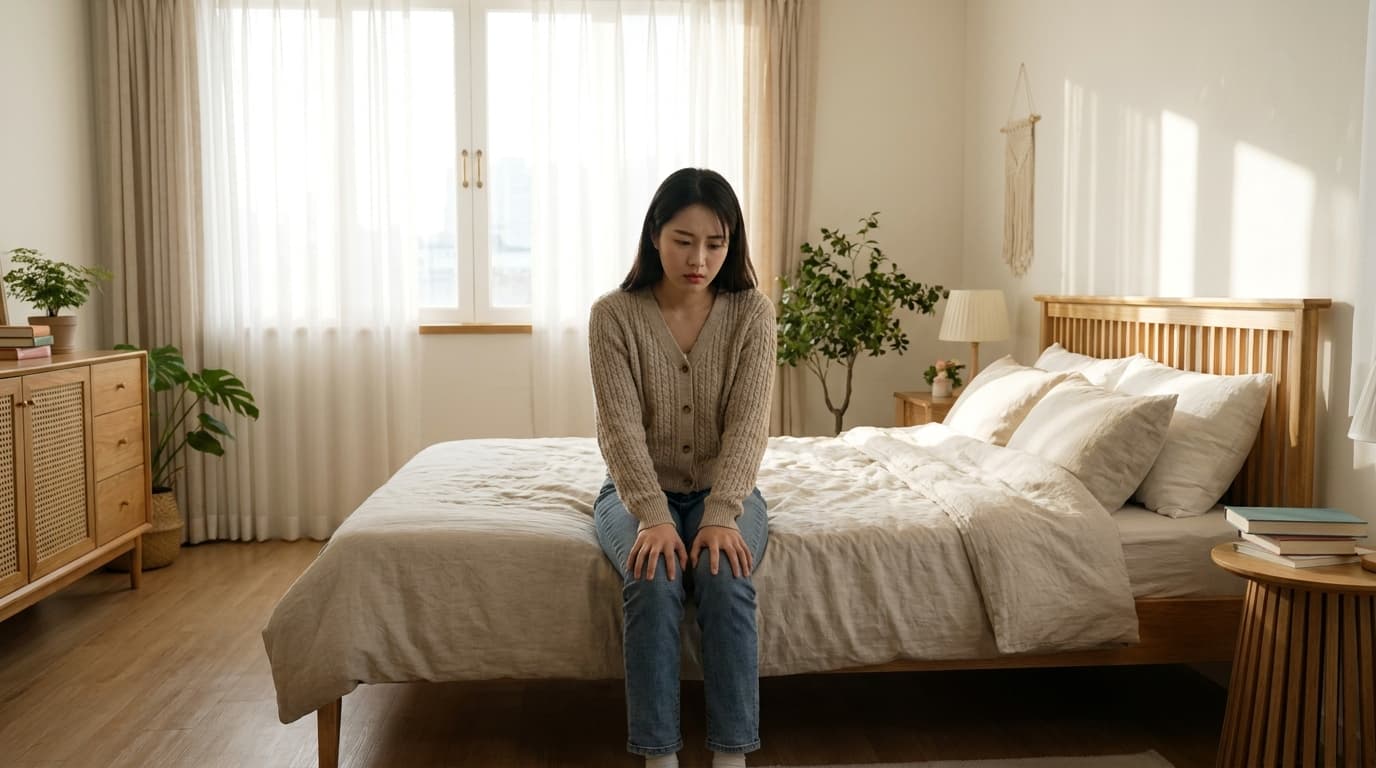
Bleeding After Intercourse Could It Be Cervical Cancer Oriental Medicine Answers to Anxiety
Hello, this is Dalimchae Korean Medicine Clinic. # Bleeding After Intercourse Could It Be Cervical Cancer Oriental Medicine Answers to Anxiety Bleeding after sexual intercourse is one of the symptoms that brings great anxiety to many women. While questions like "I'm bleeding after intercourse, could it be cervical cancer?" are hard to easily bring up due to vague fears about cervical cancer, it is actually a symptom that can be experienced very commonly. Such bleeding can be a premonitory symptom of cervical cancer, but can also occur due to various other causes. The important thing is not to turn away from symptoms but to grasp the exact cause and start appropriate treatment. 💡 **[Key Answer]** Top 3 most common causes of bleeding after intercourse: ① Cervical dysplasia due to HPV infection / ② Cervicitis / ③ Cervical polyp Dalimchae Korean Medicine Clinic restores cervical health and relieves anxiety caused by cervical dysplasia and HPV infection through enhanced immunity and improved uterine environment. ## Is bleeding after intercourse a premonitory symptom of cervical cancer? Bleeding after intercourse often occurs when small blood vessels in the cervix are stimulated. While a healthy cervix is resistant to 출혈, when cervical tissue weakens or inflammation occurs due to specific causes, bleeding can easily occur. Cervical cancer, one of the most worrying causes, mostly has no symptoms in the early stages, but as it progresses, symptoms like bleeding after intercourse and abnormal vaginal discharge can appear, requiring caution. However, not all bleeding after intercourse implies cervical cancer. It can sufficiently occur due to benign diseases such as cervicitis, cervical polyps, and cervical erosion (tissue damage from inflammation). Especially, cervical dysplasia (CIN) caused by human papillomavirus (HPV) infection is a pre-stage of cervical cancer and can accompany bleeding after intercourse, requiring careful examination and management. Dysplasia is divided into CIN 1, 2, and 3 according to stages, and CIN 3 is classified as the immediate pre-stage of cervical cancer. ## What is the problem with cervical dysplasia and HPV infection? Cervical dysplasia is mainly caused by human papillomavirus (HPV) infection. HPV is a virus transmitted through sexual contact, and in most cases disappears naturally without special symptoms, but when specific high-risk viruses are continuously infected, they cause alterations in cervical cells, progressing to cervical dysplasia. Being infected with HPV does not automatically lead to cervical dysplasia or cancer. Problems occur when our body's immunity fails to overcome the virus and the virus stays in the cervical tissue for a long time. When immunity lowers, the activity of the virus increases, accelerating the alteration of cervical cells. Therefore, the core of cervical dysplasia and HPV infection can be seen to depend on 'immunity'. ## Do we definitely need surgery for cervical dysplasia? When diagnosed with cervical dysplasia, many people first think of surgical treatments like conization. Especially for CIN stages 2 and 3, surgery is often recommended. However, for CIN stage 1, about 50% naturally improve within 1 to 2 years, and even in CIN stage 2, recovery can be expected through oriental medicine treatment without surgery. While surgery can reduce immediate risks by removing altered cervical tissue, it can cause side effects such as shortened cervical length, bleeding, or infection, and especially for women planning pregnancy and childbirth, it can carry risks such as cervical incompetence. Above all, since it is not a treatment removing the virus itself, if immunity weakens, HPV can reactivate and recur. Therefore, rather than unconditional surgery, a cautious treatment plan considering individual circumstances, the stage of dysplasia, and immune status is important. Incheon Cervical Dysplasia Oriental Medicine Clinic prioritizes fundamental treatment through immunity enhancement. ## How does oriental medicine treat cervical dysplasia? At Dalimchae Korean Medicine Clinic, the root cause of cervical dysplasia is viewed as lowered body immunity and imbalance in the uterine environment. Beyond simply removing altered cells, we focus on boosting internal healing power so that the HPV virus can spontaneously disappear and cervical cells can recover normally. A systematic review published in 2017 in BioScience Trends suggested that traditional Chinese medicine treatments for human papillomavirus (HPV) infection show positive effects in promoting virus clearance and regression of cervical dysplasia lesions, acting through immune response regulation. Researchers concluded these results support the usefulness of traditional Chinese medicine approaches in treating HPV infection. Additionally, domestic oriental medicine studies in journals such as the Journal of Korean Obstetrics & Gynecology have steadily reported the effectiveness of oriental medicine treatments for cervical dysplasia and persistent HPV infection. These studies suggest that oriental medicine treatments strengthening local immunity of the cervix and restoring systemic physical strength and immune balance can increase the natural recovery rate of CIN stage 1 and further help lesion regression in CIN stage 2 patients. Based on these data, Dalimchae Korean Medicine Clinic performs **constitutional improvement** treatment strengthening weakened uterine and systemic immune systems to raise resistance against the HPV virus. Rather than simply suppressing symptoms, the goal is "not putting out symptoms, but making a body that doesn't light up again." Through herbal medicine prescriptions tailored to individual constitution and symptoms, we improve blood circulation around the cervix, alleviate inflammation, and aid regeneration of damaged cervical tissue. In addition, parallel acupuncture, moxibustion, and pharmacopuncture treatments enhance uterine immunity and restore overall physical condition, creating a fundamental treatment environment preventing HPV virus from activating further. This is becoming a new hope for many visitors seeking Incheon HPV Oriental Medicine Clinic. ### Cervical Health Checklist How many of the following apply to you? * ( ) Occasionally spotting or bleeding after intercourse. * ( ) Increased vaginal discharge or color and odor different from usual. * ( ) Frequently feeling pelvic pain or lower abdominal discomfort. * ( ) Menstrual cycle became irregular or menstrual cramps worsened. * ( ) Feeling chronic fatigue and condition not recovering easily. * ( ) Vulnerable to stress and feeling lowered immunity. * ( ) Diagnosed with HPV infection or heard cervical dysplasia findings. **Diagnosis Results:** * 3+ items apply: Suspect cervical and immunity decline → Recommendation to consider oriental complex treatment. * 5+ items apply: High possibility of cervical health abnormality → Immediate visit and detailed examination recommended. If you are experiencing other women's diseases such as infertility or menstrual irregularities as related conditions, improvement across the entire uterine environment may be even more necessary. Dalimchae Korean Medicine Clinic Incheon Branch helps manage this overall women's health together. --- **Q. How long does cervical dysplasia take?** A. The treatment period for cervical dysplasia can vary depending on individual dysplasia stages, immune status, HPV virus type and activity. Generally, improvement can be expected through 3 to 6 months of steady oriental medicine treatment, and steady follow-up observation is important. **Q. Can HPV infection also be treated with oriental medicine?** A. Yes, oriental medicine treatment helps viruses spontaneously disappear by strengthening body immunity rather than directly removing the HPV virus itself. It is effective in improving the local immune environment of the cervix and raising systemic immunity to build resistance against the HPV virus. **Q. Can dysplasia naturally heal?** A. CIN stage 1 cervical dysplasia tends to naturally improve within 1 to 2 years in about 50%. However, if immunity lowers or infected with high-risk HPV viruses, there is a risk of progression, requiring active immunity management. **Q. Cervical dysplasia and menstrual irregularities are present together, can they be treated together?** A. Yes, at Dalimchae Korean Medicine Clinic, cervical dysplasia and various women's diseases like menstrual irregularities are treated from an integrated perspective. Oriental medicine treatment improving overall uterine and ovarian functions and balancing immunity can help simultaneous improvement of multiple women's diseases. --- Bleeding after intercourse and cervical dysplasia are not problems solved by enduring. You no longer need to turn away from bodily signals sent for a long time. When approached in the right direction, your body responds faster than you think. Bring the symptoms you are experiencing as they are. Dalimchae Korean Medicine Clinic will find the cause together. Where life blooms. Herbal medicine is Dalimchae Korean Medicine Clinic. Check symptoms similar to yours first through Dalimchae Korean Medicine Clinic homepage AI consultation! Medical Supervision | Women and Pregnancy Treatment Standard: Dalimchae Korean Medicine Clinic Incheon Branch Oriental Medical Doctor Min Jihong (Cervical Dysplasia Column) #cervicaldysplasia #HPV #bleedingafterintercourse #incheonclinic #immunity #orientalmedicine #constitutionalimprovement Pregnancy & Postpartum - Infertility & Pregnancy Prep