
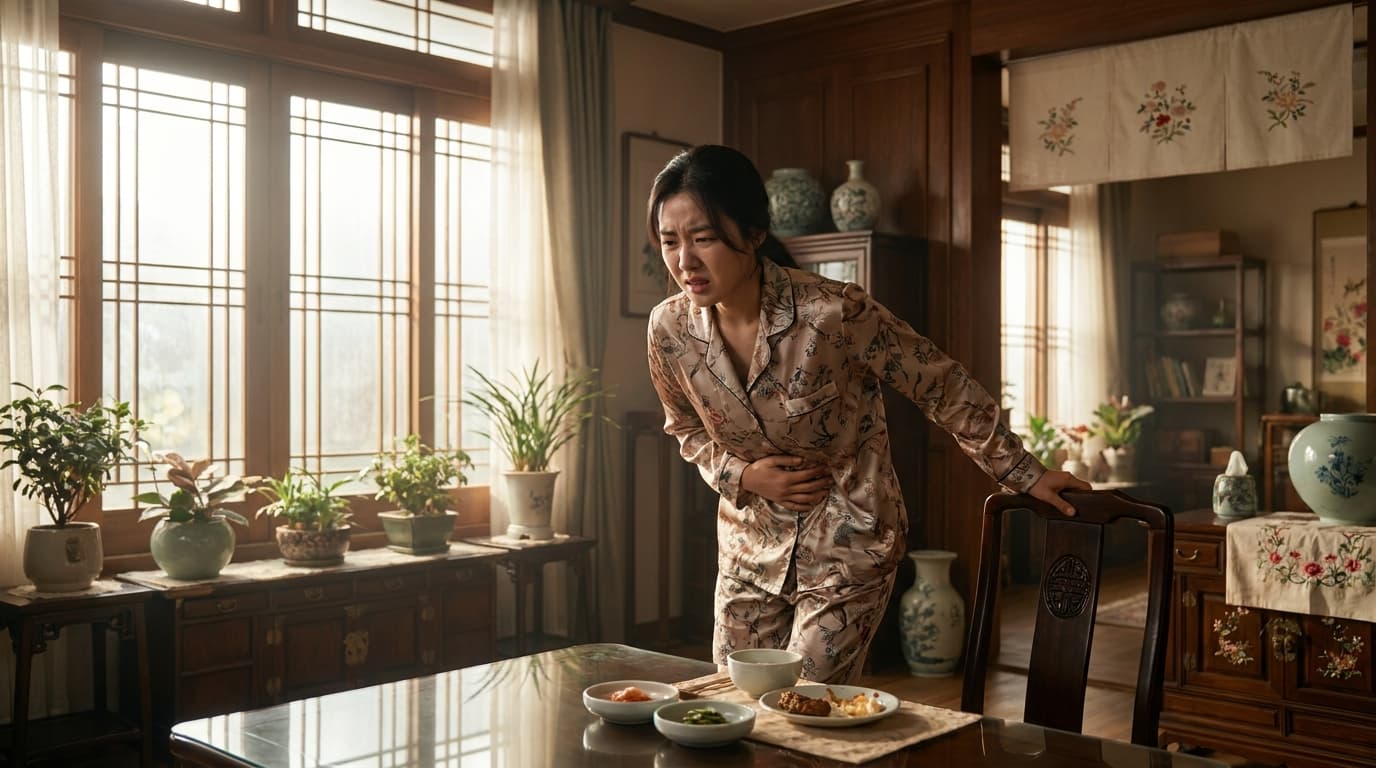
Bathroom Right After Eating, Is It Just Me? Korean Medicine Solution for IBS
Hello. This is Dalimchae Korean Medicine Clinic. # Bathroom Right After Eating, Is It Just Me? Korean Medicine Solution for IBS "I have to go to the bathroom right after eating." "When I'm nervous, my stomach hurts and I can't stop the diarrhea." "I can't eat anything because I'm anxious whenever I have an important appointment." Many people experience great difficulty in daily life due to unpleasant bowel sensations, unpredictable abdominal pain, and diarrhea that come after meals. In particular, the symptom of seeking a bathroom immediately after eating goes beyond simple discomfort and easily has a negative impact on social life and mental health. Are you worried that a meal others enjoy comfortably is the beginning of pain and anxiety for you? 💡 **[Key Answer]** **3 most common causes of "bathroom right after eating":** ① **Intestinal and Brain Connection Over-sensitivity** (Gut-Brain Axis dysfunction) ② **Hypersensitivity of Gastrointestinal Peristalsis After Meals** (Hyperactive gastro-colic reflex) ③ **Imbalance of Intestinal Microbiota and Weakening of the Barrier Function** Dalimchae Clinic stabilizes the hypersensitivity of the intestines with **intestinal detox** treatment and fundamentally restores intestinal health. ### **You, Who Runs to the Bathroom Right After Eating, Is It Irritable Bowel Syndrome?** The symptom of going to the bathroom immediately after a meal is also called 'postprandial diarrhea,' and is mostly deeply related to diarrhea-predominant irritable bowel syndrome (IBS-D), a type of irritable bowel syndrome (IBS). IBS is a common chronic disease affecting about 10% of the world's population, characterized by repeated abdominal pain, diarrhea, and abnormal bowel movements such as constipation, but it is a functional gastrointestinal disease where no special structural abnormalities are found in endoscopy or imaging tests. What is the fundamental cause of these symptoms? The gut is not just a digestive organ, but is closely connected to the brain, to the point of being called our body's second brain. This is called the 'Gut-Brain Axis.' When the balance of the gut-brain axis is broken by various factors such as stress, anxiety, or certain foods, the gut reacts over-sensitively, leading to symptoms like postprandial diarrhea. In particular, if the 'gastro-colic reflex,' where peristaltic movement of the stomach and intestines occurs quickly after a meal, is abnormally hyperactive, the intestines can overreact as soon as food enters, leading to diarrhea. In addition, intestinal microbiota imbalance, changes in intestinal mucosal permeability, and micro-inflammatory reactions within the intestinal mucosa are also pointed out as important causes. ### **The Gut that Constantly Sends Signals, Now is the Time to View It from a Korean Medicine Perspective** In modern medicine, symptomatic drugs (antidiarrheals, antispasmodics, etc.) or dietary control (low FODMAP diet, etc.) are mainly used for the treatment of IBS, but there is a limit to it being a fundamental solution as it is temporary for symptom relief or has concerns about side effects when taken long-term. In Korean medicine, these irritable gut problems are seen as a result of broken balance in our whole body, including stress and emotional factors, rather than a problem with only the gut. In particular, excessive stress can affect the autonomic nervous system and abnormally accelerate or slow down intestinal movement. ### **Diarrhea-predominant Irritable Bowel Syndrome, Improvement of Symptoms and Quality of Life with Korean Medicine Treatment** Recently, clinical research results showing that Korean medicine treatment is effective in improving diarrhea-predominant IBS symptoms are being announced. Beyond simply suppressing symptoms, it focuses on fundamentally improving intestinal health by regulating intestinal hypersensitivity and stabilizing gut-brain axis functions. In April 2026, a study by a joint research team from the Korea Institute of Oriental Medicine and Kyung Hee University, published in the international journal **Integrative Medicine Research**, verified the efficacy and safety of **'Gwak-jeong-tang-gami (藿正湯加味)'**, a herbal medicine prescription, in diarrhea-predominant IBS patients. This study was conducted as a randomized, double-blind, placebo-controlled clinical trial on 60 adult patients with diarrhea-predominant IBS who met the diagnostic standard 'Rome IV.' Participants were randomly assigned to take Gwak-jeong-tang-gami granules or a placebo 3 times a day for 4 weeks. As a result of the trial, the group of patients who took Gwak-jeong-tang-gami showed a treatment response rate more than twice as high as the placebo group. In particular, the overall symptom improvement rate of the Gwak-jeong-tang-gami group reached 55.2%, significantly exceeding the 26.7% of the placebo group, proving a statistically significant effect. The criteria for 'symptom improvement' set in this study were very strict, such as judging it effective only when severe abdominal pain decreased by more than 30% and the form of stool (Bristol Stool Scale) returned to the normal range, maintaining this state for more than half of the total treatment period. In addition, not a single case of side effects or adverse reactions related to the drug occurred during the 4-week intake period, securing safety so that IBS patients who need a miraculous change in treatment can take it with peace of mind. The researchers concluded that Gwak-jeong-tang-gami can be a new treatment alternative that can improve the quality of life through abdominal pain reduction and normalization of bowel movements in diarrhea-predominant IBS patients. Based on this data, Dalimchae Clinic, an IBS clinic in Songdo, treats IBS through **intestinal detox** treatment that regains the gut's inherent health, rather than simply suppressing symptoms. Intestinal detox is a treatment principle that discharges toxins accumulated on the intestinal wall, creates a beneficial microbial environment in the intestines, reduces inflammation of the intestinal mucosa, and strengthens the intestinal wall function. Through this, it helps to escape from discomfort such as the symptom of going to the bathroom immediately after eating by reducing the gut's hypersensitivity and restoring healthy communication of the gut-brain axis. ### **Dalimchae Clinic's Intestinal Detox Treatment, We Approach IBS Like This.** Dalimchae Clinic Songdo Branch provides systematic intestinal detox treatment for patients suffering from IBS. Intestinal detox focuses on strengthening the function of the intestines, our body's core defense line, and restoring healthy communication between the gut and the brain. **1. Accurate Diagnosis and Type Analysis:** In addition to the patient's symptoms, we comprehensively identify eating habits, lifestyle habits, stress levels, and psychological states to closely analyze which part of the intestines has become hypersensitive and what toxins have accumulated. Along with Korean medicine diagnosis such as pulse and abdominal diagnosis, we also check the degree of imbalance in the gut-brain axis through autonomic balance tests if necessary. **2. 1:1 Customized Intestinal Detox Herbal Medicine Prescription:** We prescribe customized herbal medicine according to individual constitutions and symptom types that help discharge toxins in the intestines, alleviate intestinal mucosal inflammation, and restore damaged intestinal wall function. By utilizing medicinal herbs that have the efficacy of regulating intestinal movement and suppressing diarrhea, such as Gwak-jeong-tang-gami mentioned above, we calm the overreaction of the intestines and promote intestinal health. **3. Simultaneous Korean Medicine Therapy for Restoring Intestinal Function:** Through acupuncture, moxibustion, and pharmacopuncture treatment, we improve the circulation of Qi and blood in the intestines, alleviate abdominal pain and diarrhea symptoms, and relax tensed autonomic nerves. This helps reduce inflammation in the intestines and promote the regeneration of intestinal mucosal cells to strengthen the defensive function of the intestinal wall. **4. Lifestyle and Dietary Management Coaching:** To maximize the treatment effect and prevent recurrence, we educate on dietary therapy and stress management methods suitable for individual intestinal conditions. We guide patients to avoid foods or factors that burden or stimulate the intestines and maintain a diet that helps the proliferation of beneficial bacteria in the intestines. ### **Could I Also Have IBS? Postprandial Diarrhea Self-Checklist** If 3 or more items below apply to you, you should suspect IBS and consider intestinal detox Korean medicine treatment. * ◻ I feel the urge to go to the bathroom immediately within 30 minutes after a meal. * ◻ Diarrhea is accompanied by abdominal pain, and the pain is temporarily relieved after bowel movements. * ◻ I have diarrhea several times a day, and the form of stool is watery or loose. * ◻ Abdominal pain and diarrhea symptoms become severe when placed in stressful or tense situations. * ◻ Abdominal bloating and a feeling of stuffiness in the stomach are frequent. * ◻ I often have diarrhea even though I didn't eat particularly spoiled food. * ◻ Constipation and diarrhea repeat irregularly. * ◻ Diarrhea symptoms do not appear during sleep. **Apply to 3 or more → Suspected Intestinal Hypersensitivity → Review Dalimchae Clinic Intestinal Detox Treatment** **Apply to 5 or more → Immediate visit for precise diagnosis and treatment recommended** If you are experiencing these symptoms, don't suffer alone anymore. At Dalimchae Clinic, a Songdo intestinal detox clinic, we can find the cause together and find a fundamental solution. Since those who suffer from reflux esophagitis or chronic indigestion (Dam-jeok) often complain of similar symptoms due to abnormalities in the gut-brain axis, integrated treatment through accurate diagnosis is necessary. --- ### **FAQ: IBS, We Resolve Your Questions.** **Q. How long should I be treated for the symptom of going to the bathroom right after eating?** A. The treatment period varies depending on the severity of the individual's symptoms, lifestyle habits, and chronicity. Generally, improvement of symptoms can be expected through steady treatment and lifestyle management for about 3 months, and management for preventing recurrence is important thereafter. **Q. Can IBS also be treated with Korean medicine?** A. Yes, Korean medicine aims for fundamental treatment by approaching the cause of IBS from a complex perspective such as gut-brain axis imbalance, stress, and constitutional factors, as well as the problem of the gut itself. The significant effect of herbal medicine treatment was also proven in the clinical research mentioned above. **Q. Can frequent diarrhea heal naturally?** A. Temporary diarrhea can improve naturally, but chronic postprandial diarrhea, such as going to the bathroom immediately after eating, is highly likely to be IBS. This is unlikely to get better on its own and can worsen depending on stress or eating habits, so it is good to seek help from a specialist. **Q. I have both IBS and reflux esophagitis, can they be treated together?** A. Yes, both IBS and reflux esophagitis are diseases deeply related to gut-brain axis dysfunction and autonomic nervous system imbalance. Dalimchae Clinic's intestinal detox treatment is effective in improving both symptoms integratedly by improving the overall function of the digestive system and regaining the balance of the autonomic nerves. --- The symptom of going to the bathroom right after eating is not a problem that can be solved by enduring. You no longer have to ignore the signals your body has been sending for a long time. If you approach in the right direction, the body responds faster than you think. Bring your symptoms exactly as they are. At Dalimchae Clinic, we will find the cause together. Where life blooms. For herbal medicine, it's Dalimchae Korean Medicine Clinic. Check your symptoms similar to mine through the AI consultation on the Dalimchae Clinic website first! This article is health information compiled by Dalimchae medical staff based on questions frequently received in the treatment room. Medical Supervision | Intestinal & Digestive Treatment Standards Dalimchae Clinic Songdo Branch Korean Medicine Doctor Oh Hyunmin (Intestinal Disease Column)