
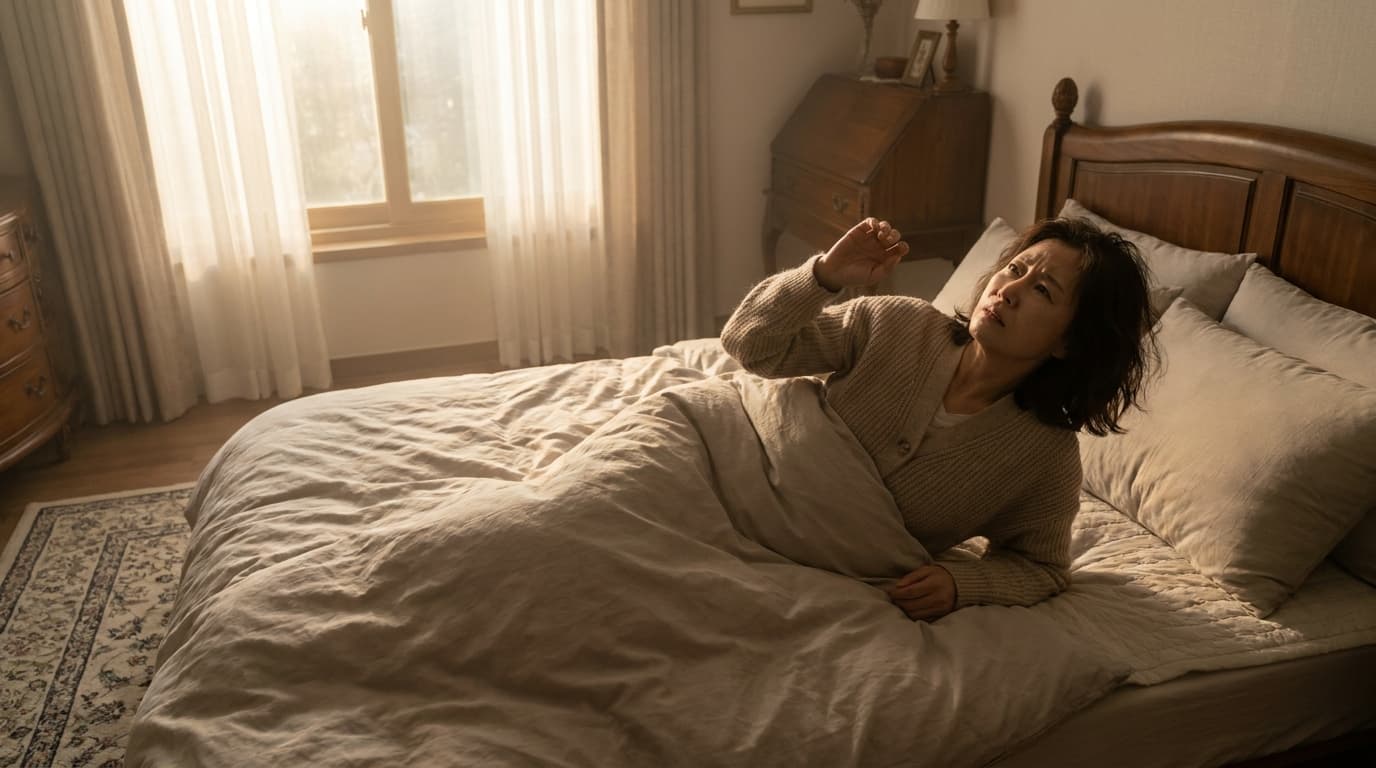
Are Your Limbs Stiff and Slow Check Your Body Warning Light After 50 Before It Is Too Late
Hello, this is Dalimchae Korean Medicine Clinic. # Are Your Limbs Stiff and Slow? Check Your Body's Warning Light After 50 Before It Is Too Late! Have you ever suddenly felt your limbs become stiff and slow compared to before? Especially after 50, it is easy to feel anxious about these changes. Dismissing it as mere aging makes it easy to worry whether a serious health problem has occurred. Especially if changes in tremors or gait accompany this, you should never take your body's warning light lightly. This is because it could be an early symptom of Parkinson's disease. Dalimchae Korean Medicine Clinic understands these symptoms as an autonomic nervous system imbalance and focuses on treatments that find their root cause and help recovery. 💡 **[Key Answer]** 3 most common causes for the symptom "limbs feel stiff and slow": ① Decrease in dopamine nerve cells in the brain / ② Autonomic nervous system dysfunction / ③ Chronic nervous system inflammation. Dalimchae Korean Medicine Clinic restores the balance of the brain and nervous system through autonomic nervous system stabilization and strengthens the body's natural recovery power. ## Parkinson's Disease, Is It Simply a Matter of Stiff Limbs? Parkinson's disease is a representative degenerative brain disease caused by the progressive loss of dopamine-secreting nerve cells in the substantia nigra of the brain. Dopamine is an essential neurotransmitter for smoothly controlling our movements, and when it is deficient, motor symptoms such as tremors, rigidity, slow movement (bradykinesia), and postural instability appear. Many people think only of motor symptoms like tremors or stiff bodies when hearing Parkinson's disease, but in fact, Parkinson's disease is a complex disease accompanied by various non-motor symptoms in addition to motor symptoms. Pain, depression, anxiety, constipation, sleep disorders, and cognitive decline are representative non-motor symptoms. These non-motor symptoms significantly degrade patients' quality of life and sometimes appear before motor symptoms, making early diagnosis even more difficult. ## Body Changes After 50, What Is the Relationship with Autonomic Nervous System Imbalance? Behind the symptoms of stiff and slow movement lies a deep involvement of autonomic nervous system imbalance. The autonomic nervous system is responsible for vital functions necessary for life maintenance, such as heartbeat, digestion, body temperature regulation, and blood pressure regulation, regardless of our will. However, when the balance of this autonomic nervous system collapses, the brain cannot rest and becomes overactivated or fails to function properly. Especially in early Parkinson's disease patients, research results have been reported showing that autonomic dysfunction is closely related to cognitive decline. According to a research team in the Department of Neurology at Soonchunhyang University Seoul Hospital (first author Byung-eok Joo, corresponding author Prof. Gyum-il Kwon) published in the international journal 'Scientific Reports' in May 2025, it was confirmed that autonomic dysfunction, especially gastrointestinal dysfunction, in early Parkinson's disease patients is closely related to cognitive decline. As a result of the study, the higher the autonomic dysfunction score, the lower the memory test score and attention and judgment tend to be. This suggests that autonomic function problems can go beyond simple physical discomfort and directly connect to brain cognitive decline. Based on these research results, Dalimchae Korean Medicine Clinic focuses on normalizing brain function and regaining overall health through autonomic balance recovery, rather than viewing stiff and slow movement merely as a musculoskeletal problem. In Korean medicine, degenerative brain diseases like Parkinson's disease are viewed not as a result of aging, but as occurring when our body's vital energy weakens and blood circulation problems arise. In particular, it focuses on calming the overheating of the brain and nervous system and helping restore damaged nerve function. Such treatment connects with the process of regaining autonomic balance and creating an environment where the body can recover on its own. ## Oriental Medicine Treatment, How Does It Help Improve Parkinson's Symptoms? Oriental medicine treatment for Parkinson's disease shows effectiveness in improving non-motor symptoms such as pain, sleep disorders, and depression, as well as motor symptoms such as tremors, rigidity, and bradykinesia. In a study published in the neurological journal 'Parkinsonism and Related Disorders' by Professor Park Sung-wook's research team at Gangnam Kyung Hee University Korean Medicine Hospital, the efficacy of Oriental medicine treatment targeting Parkinson's patients was proved. In this study, comparing the bee venom pharmacopuncture group (18 patients) and the acupuncture treatment group (17 patients), after 8 weeks of treatment, positive improvement effects were shown in the Unified Parkinson's Disease Rating Scale (UPDRS). Particularly, Part III scores related to motor function improved significantly from 15.0 to 10.0 in the bee venom pharmacopuncture group and from 17.0 to 13.0 in the acupuncture group. This suggests that Oriental medicine treatment can provide practical help in improving motor ability in Parkinson's patients. Based on these research results, Dalimchae Korean Medicine Clinic focuses on matching autonomic balance and helping nerve cell activation through individualized Oriental medicine complex treatments such as pharmacopuncture and acupuncture. ### Creating an Environment Where the Brain Can Rest — Autonomic Stability Treatment at Dalimchae Korean Medicine Clinic Dalimchae Korean Medicine Clinic views the symptoms of stiff and slow body movement not as simple aging or localized problems, but as the result of brain and nervous system overload or functional decline due to autonomic nervous system imbalance. Our body is like a complex computer, and if the autonomic nervous system 'main breaker switch' loses balance, the brain 'main server' fails to operate properly. Lowering nervous system heat and creating an environment where the brain can rest — in Korean medicine this is called Suseunghwahang — is the core of Dalimchae Korean Medicine Clinic's autonomic stability treatment. To this end, customized herbal medicine tailored to individual constitution and symptoms is prescribed to reduce nervous system inflammation, improve blood circulation, and supply nutrition necessary for dopamine production and utilization. Also, acupuncture and pharmacopuncture treatments relax stiff muscles and activate nerve functions to smoothly assist body movement. All these processes aim to maximize our body's autonomous recovery ability, turning off symptoms so that they do not turn on again. Many people looking for Incheon Parkinson's Korean Medicine Clinic are experiencing body changes through these integrated treatments at Dalimchae Korean Medicine Clinic. ## Could I Also Have Early Parkinson's Symptoms? Self-Checklist Check the following items. It is recommended to look more carefully if you are experiencing stiff and slow body movement after 50. * Hands or legs tremble even when resting. (Usually starts on one side) * Overall body movement has slowed down and become sluggish. (Bradykinesia) * Limbs or torso are stiff and do not bend well. (Rigidity) * Arm swinging decreases when walking, and walking becomes shuffling. (Gait disturbance) * Writing in small letters has become difficult. (Micrographia) * Frequently told that voice has become soft or expressionless. * Feel like falling often or difficult to maintain posture. (Postural instability) * Chronic constipation, dizziness, and decreased sense of smell appear. * Bad night talking or snoring increases, or waking up frequency at night increases. **Criteria:** * 3 or more items apply: Suspected Parkinsonism due to autonomic imbalance -> Consider Oriental medicine complex treatment * 5 or more items apply: High possibility of early Parkinson's disease -> Immediate precise examination and visit recommended ## FAQ: Questions About Parkinson's Disease and Oriental Medicine Treatment **Q. Are stiff and slow body movements at 50 Parkinson's disease?** A. Not everyone with these symptoms at 50 has Parkinson's disease. However, dopamine nerve cells decreasing with age is natural, and it could also be early Parkinson's disease symptoms, making accurate diagnosis and early intervention important. **Q. How long does Parkinson's disease last? Is management possible after treatment?** A. Parkinson's disease is a chronic progressive disease, and unfortunately post-treatment management is difficult. However, starting appropriate Oriental medicine treatment early can delay symptom progression and greatly improve quality of life. **Q. Do Parkinson's patients always have autonomic problems?** A. Yes, autonomic dysfunction accompanies a significant number of Parkinson's patients. This affects not only motor symptoms but also pain, constipation, dizziness, sleep disorders, and even cognitive decline. **Q. Does taking herbal medicine for a long time strain the liver?** A. Herbal medicine prescribed at Dalimchae Korean Medicine Clinic is safe using only medicinal herbs passing strict KFDA standards, and is customized considering the patient's constitution and health condition. If you have concerns about liver function, you can fully consult with medical staff during treatment. Stiff and slow body movement is not a problem solved by enduring. You no longer need to turn away from bodily signals sent for a long time. Approaching in the right direction makes the body react faster than you think. Bring the symptoms you are experiencing as they are. Dalimchae Korean Medicine Clinic Incheon branch will find the cause together. Where life blooms. Herbal medicine is Dalimchae Korean Medicine Clinic. Check similar symptoms first through AI consultation on the Dalimchae Korean Medicine Clinic website! This article is health information organized together by Dalimchae medical staff based on questions frequently received in the consultation room. Medical Supervision | Brain & Autonomic Nervous System Treatment Standard Dalimchae Korean Medicine Clinic Incheon Branch Korean Medicine Doctor Min Ji-hong (Parkinson's Column)