
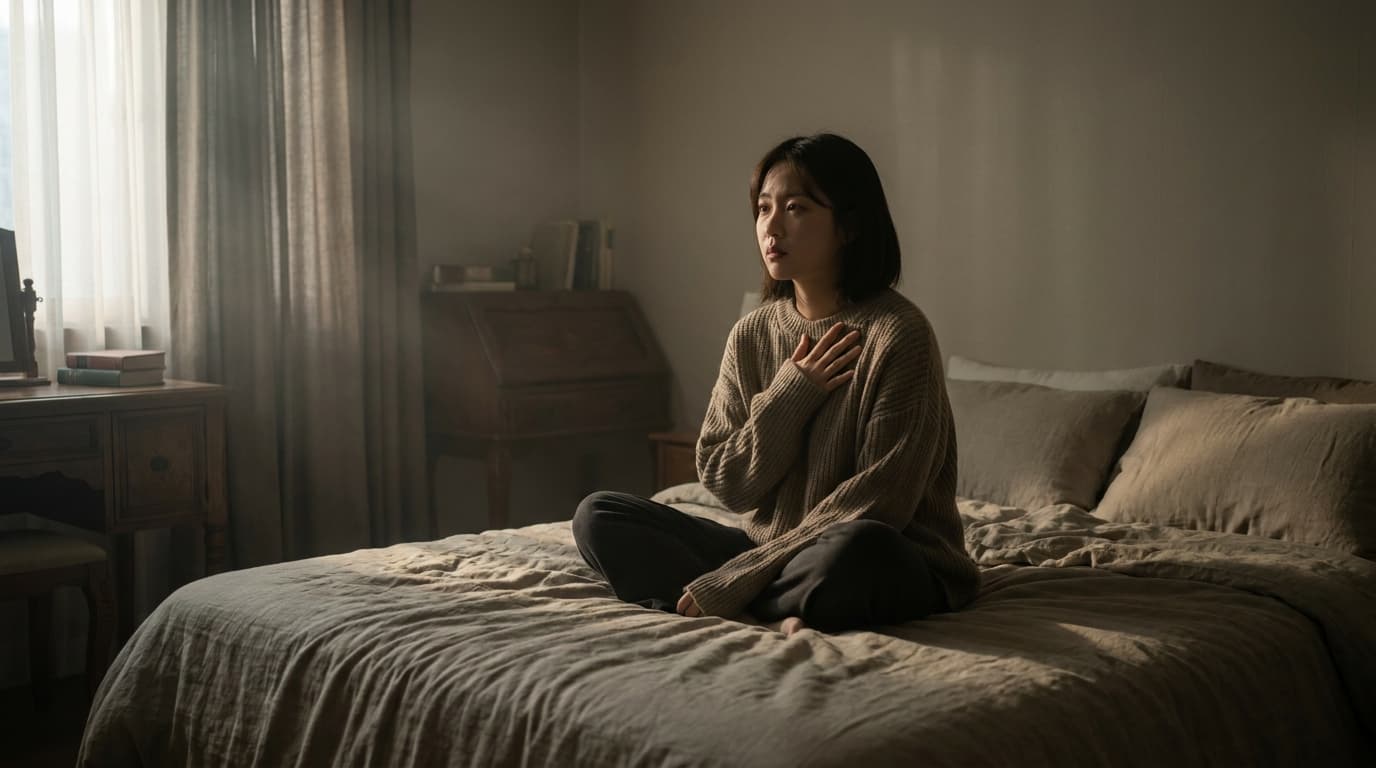
Always Anxious and Sensitive Could It Be an Anxiety Disorder
Hello. This is Dalimchae Oriental Clinic. # Always Anxious and Sensitive, Could It Be an Anxiety Disorder? In our daily lives, everyone experiences worries and anxieties of various sizes. However, many people feel frustrated thinking they might be uniquely sensitive and anxious. At night, they struggle to fall asleep, experience heart palpitations or cold sweats over minor things. Sometimes, their chest feels stuffy for no reason, and persistent fatigue lingers because whole-body tension never releases. Could these signals, which we've shrugged off thinking "Am I just sensitive?" or "It will get better eventually," be important warning signs from our bodies? 💡 **[Key Answer]** The 3 most common causes of always feeling anxious and sensitive: ① **Autonomic Imbalance** / ② **Excessive Stress** / ③ **Brain Function Regulation Disorder** Dalimchae Oriental Clinic approaches this with autonomic stabilization treatment to improve the state where the brain cannot rest due to hypersensitivity to external stress, thereby relieving anxiety. ## How can we distinguish between ordinary sensitivity and anxiety disorder? Everyday sensitivity and anxiety are natural psychological reactions to specific situations or events. For example, feeling tense before an important exam or uncomfortable in an unfamiliar environment is normal. However, if this anxiety persists without a specific reason or is excessively intense, causing disruption in daily life, an 'anxiety disorder' may be suspected. Anxiety disorder often accompanies physical symptoms beyond psychological issues. Heart palpitations, shortness of breath, indigestion, headaches, dizziness, muscle tension, and sleep disorders are representative. Especially if these symptoms repeat even though Western medical tests reveal no special abnormalities, it can be a sign that body balance is broken. The important thing is to reflect on how frequently and severely anxiety symptoms appear and how much they degrade your quality of life. ## Always Anxious and Sensitive Mind, What Is Happening Inside Your Body? One of the core causes of chronic anxiety and sensitivity is **autonomic nervous system imbalance**. The autonomic nervous system consists of the sympathetic and parasympathetic nerves, which regulate essential survival functions. The sympathetic nerve acts as a 'warning light' to cope with danger, tensioning the body and raising energy, while the parasympathetic nerve acts as a 'rest switch' that relaxes the body and stores energy. Excessive stress, irregular lifestyle habits, and excessive worry excessively hyperactivate the sympathetic nerve, relatively lowering parasympathetic function and breaking autonomic balance. It is like a car engine continuously overheating. If this state persists, the brain cannot rest properly and constantly maintains a state of tension, easily startling over minor stimuli and feeling anxiety. This is often not just a matter of the mind, but the result of malfunction in the autonomic nervous system, our body's most basic regulatory system. ## How Does Oriental Medicine View and Treat Anxiety Disorders? Oriental medicine views anxiety disorders not merely as mental problems, but as imbalances resulting from wondrous changes in body and mind. In particular, it diagnoses various causes according to patient constitution and symptom patterns, such as 'Heart-Spleen Deficiency (心脾兩虛)', 'Liver Qi Stagnation (肝氣鬱結)', or 'Heart-Gallbladder Timidity (心膽虛怯)', aiming for fundamental treatment by finding the root. Modern medical studies also report that Oriental medical treatment is effective in improving anxiety symptoms. In 2024, a joint research team from the Korea Institute of Oriental Medicine and Kyung Hee University revealed that electroacupuncture stimulation activates the trigeminal nerve pathway, suppressing neuroinflammation and improving depressive and anxious behaviors. In particular, this study scientifically verified the effect of acupuncture on brain function regulation by confirming that electrical acupuncture stimulation at the Baihui (GV20) and Yintang (EX-HN3) points stimulated related brain nuclei. Furthermore, a 2020 study on Oriental treatment patterns for anxiety disorder patients reported that Korean medicine doctors most commonly use acupuncture (95.9%) and herbal prescriptions (85.1%) to treat anxiety disorders, expecting drug discontinuation or reduction, physical and psychological symptom improvement, and enhanced quality of life through such treatments. In particular, herbal medicine treatment was emphasized as a crucial factor in general symptom improvement. These research results align with Dalimchae Clinic's core philosophy of treating anxiety disorders. Rather than merely suppressing symptoms, it helps the body maintain a stable state on its own by restoring the balance of the brain and autonomic nervous system. ## Incheon Anxiety Disorder, What Is Dalimchae Clinic's Autonomic Stabilization Treatment? Dalimchae Clinic's Incheon branch focuses on correcting **autonomic imbalance**, the root of chronically anxious and sensitive emotions. When autonomic balance collapses, the brain cannot rest. The core is to stabilize the excessively hyperactivated sympathetic nerve and restore lowered parasympathetic function, creating an environment where the brain can comfortably rest. In Oriental medicine, this is called 'Water Up, Fire Down (水昇火降)', emphasizing the importance of keeping the head cool and the lower abdomen warm to promote whole-body Qi-Blood circulation and balance. Dalimchae Clinic's autonomic stabilization treatment resolves deep-seated imbalances through personalized herbal prescriptions tailored to each individual's constitution and symptoms. In addition, various Oriental therapies such as acupuncture, moxibustion, and cupping are combined to strengthen autonomic regulation and help brain function activation. Especially for those looking for an **Incheon Anxiety Disorder Clinic**, it is important to help reduce nervous system overload and build self-recovery power through such an integrated approach. **Anxiety Disorder Self-Diagnosis Checklist** Check how many of the following symptoms applied to you over the past 6 months. * Excessive worry and anxiety persist daily without a special reason. * Easily startled or overly startled by minor things. * Frequently feel heart palpitations, stuffiness, or difficulty breathing. * Experience sleep problems such as difficulty falling asleep at night, frequent waking, or unrefreshing sleep. * Feel muscle pain or tightness in the neck, shoulders, and back because body tension doesn't release. * Repeat gastrointestinal symptoms such as indigestion, bloating, diarrhea, or constipation. * Lack concentration and feel easily fatigued. * Anger or irritation easily flares up over trivial matters. * Frequently feel dizzy or have a foggy head feeling. **Judgment Criteria:** * **3 or more items apply:** Suspect autonomic anxiety and consider integrated Oriental medical treatment for symptom improvement. * **5 or more items apply:** Anxiety symptoms that can significantly disrupt daily life; visiting an **Incheon Autonomic Clinic** for immediate professional diagnosis and treatment is recommended. ## FAQ **Q. Can anxiety disorders heal without medication?** A. Anxiety disorders can be improved through various methods besides drug treatment, such as Oriental medical treatment, cognitive behavioral therapy, and meditation. Dalimchae Clinic helps reduce drug dependence and achieve fundamental symptom relief by fostering self-recovery power through autonomic stabilization and constitutional improvement. **Q. Do I definitely need to take an autonomic test?** A. Yes, autonomic tests (such as HRV tests) are very helpful in objectively grasping the current balance state of the autonomic nervous system. Through this, we can more accurately diagnose the cause of anxiety symptoms and establish an optimized treatment plan for the individual. **Q. How long does herbal treatment for anxiety disorders take?** A. Treatment duration varies depending on individual symptom severity, duration of onset, constitution, and response to treatment. Usually, meaningful changes are experienced through 3 to 6 months of steady treatment, and a customized treatment plan can be established through consultation with Dalimchae Clinic Incheon medical staff. **Q. Is stress management alone insufficient?** A. Stress management is important for alleviating anxiety symptoms, but when autonomic imbalance has already deepened, stress management alone may have limitations. Adjusting the unbalanced autonomic nervous system and enhancing the body's resilience through Oriental medical treatment is much more effective. Chronically anxious and sensitive emotions are not problems solved by enduring. You no longer have to turn away from the body signals sent for a long time. When approached in the right direction, the body responds faster than you think. Bring the symptoms you are experiencing as they are. Dalimchae Clinic will help you find the cause together and regain a comfortable and stable daily life. A place where life blooms. Herbal medicine is undoubtedly Dalimchae Oriental Clinic. Check your similar symptoms first through Dalimchae Clinic website AI consultation! This health information was compiled together by Dalimchae medical staff based on questions frequently received in the clinic room. Medical Supervision | Brain & Autonomic Practice Standard, Dalimchae Oriental Clinic Incheon Branch, Korean Medicine Doctor Yang Yuchan (Anxiety Disorder Column)