
Hello, this is Dalimchae Oriental Clinic.
Exercise and Sweating Make My Body Sting and Itch: Cholinergic Urticaria, Find the Root Cause Without Enduring.
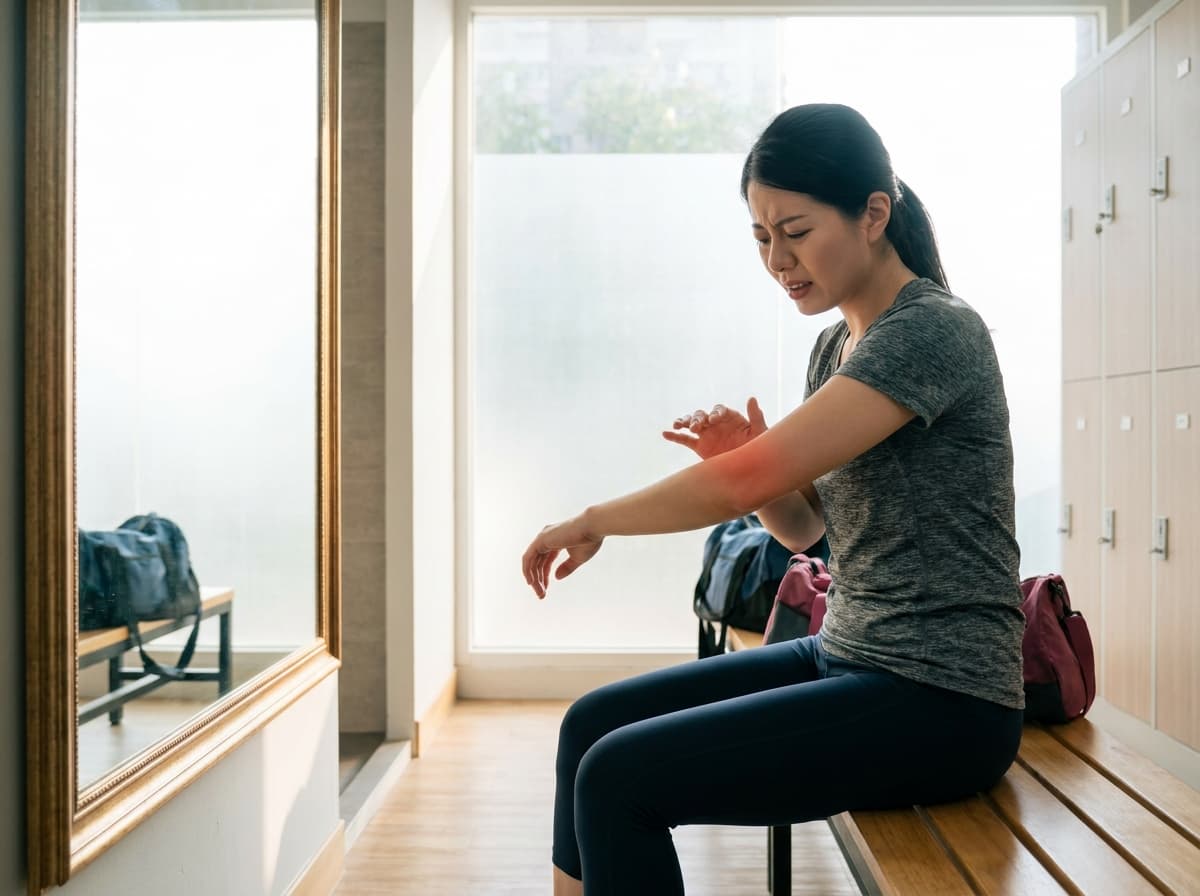
Have you ever experienced sudden stinging and itching all over your body with small red spots when you start sweating after exercise, eat spicy food, or experience severe stress? These symptoms reduce daily vitality and even affect social life, causing great distress. Many people who complain that "my body stings and itches when I sweat after exercise" are highly likely to be suffering from "cholinergic urticaria." This urticaria, which is triggered when body temperature rises, has a complex cause different from general allergic reactions, making it easy to recur with treatments that only suppress symptoms.
💡 [Key Answer] The 3 most common causes of "my body stings and itches when I sweat after exercise": ① Autonomic nervous system imbalance that overreacts to temperature changes / ② Immune hypersensitivity caused by intestinal toxins / ③ Skin immunity decrease due to stress and chronic fatigue. Dalimchae Oriental Clinic focuses on stabilizing hypersensitive immune reactions and preventing recurrence through fundamental improvement of the internal environment.
Why does the body sting and itch when exercising? What are the causes of cholinergic urticaria?
Cholinergic urticaria is a type of urticaria that appears when body temperature rises, mainly occurring in situations where body heat increases such as exercise, hot showers, stress, and consumption of spicy food. When the body's core temperature rises by more than 1 degree, small wheals (hives) of 1-5 mm appear on the skin along with stinging, itching, and burning sensations, and in severe cases, it is accompanied by chills, dizziness, or abdominal pain.
One of the main causes of cholinergic urticaria is an imbalance in the autonomic nervous system that reacts hypersensitively. Our body's autonomic nerves are responsible for various biological functions such as temperature regulation and sweat secretion, and if this balance is broken, sweat glands or surrounding tissues may not function normally and cause excessive immune responses. In addition, increased permeability of the intestinal wall due to intestinal health abnormalities (leaky gut syndrome) can cause systemic inflammatory reactions as incompletely digested food or toxins enter the blood, which also affects the skin's immune system and becomes a factor that exacerbates hypersensitivity reactions like cholinergic urticaria.
Is Korean medicine treatment effective for cholinergic urticaria?
Cholinergic urticaria is a chronic skin disease that significantly reduces quality of life, but there are many cases where it is difficult to relieve symptoms or it recurs with Western medical treatments alone. At this time, Korean medicine treatment finds and solves the root cause of the symptoms, helping to lower the recurrence rate and regain healthy skin from a long-term perspective.
A study published in the Medicine (Baltimore) journal in March 2024 conducted a systematic review and meta-analysis evaluating the clinical efficacy and safety of Xiaofeng powder modifications for chronic urticaria. According to the results of this study on a total of 1,076 patients who participated in 11 randomized controlled trials, the Xiaofeng powder modification group showed significantly better results than the antihistamine treatment group in terms of management rate after treatment (OR 2.11 [1.45, 3.07]), total effectiveness rate (OR 2.42 [1.60, 3.68]), recurrence rate (OR 0.22 [0.15, 0.34]), and side effect occurrence rate (OR 0.23 [0.12, 0.45]). The researchers concluded that the Xiaofeng powder modification is more effective than antihistamines for treating chronic urticaria and has higher safety due to lower side effects and recurrence rates.
In addition, a clinical study published in December 2018 titled "The Efficacy and Safety of a Fixed Combination of Chinese Herbal Medicine in Chronic Urticaria" evaluated the effectiveness and safety of a combined herbal treatment of Xiao-Feng-San and Qing-Shang-Fang-Feng-Tang on 56 patients with chronic urticaria. As a result of the study, the herbal treatment group showed significantly superior symptom relief compared to the control group in the 7-day Urticaria Activity Score (UAS7) on the 56th day (9.9 ± 9.2 vs. 15.6 ± 10.8, p = 0.038), and the symptom severity also showed a tendency to gradually decrease (trend analysis, p < 0.001). In particular, the level of interferon-gamma, a cytokine related to immune response, showed a positive change, decreasing by about 30.8% from the baseline in the herbal treatment group (trend analysis p = 0.013). These studies suggest that Korean medicine treatment can have a positive effect not only on improving symptoms of chronic urticaria, including cholinergic urticaria, but also on immune regulation. At Dalimchae Oriental Clinic Incheon, we help you regain health without recurrence by strengthening skin immunity and restoring fundamental internal balance through personalized Korean medicine treatment tailored to each individual's constitution and symptoms based on these data.
How does Dalimchae Oriental Clinic's Gut Detox treatment improve cholinergic urticaria?
At Dalimchae Oriental Clinic, we view the root cause of cholinergic urticaria as an "immune response abnormality" closely linked to "gut health," and solve skin diseases through Gut Detox treatment. Our body's gut is a core organ responsible for more than 70% of the body's immunity beyond being a simple digestive organ. If harmful bacteria and toxins accumulate on the intestinal wall, the function of the intestinal wall weakens, and as a result, substances that have not yet been decomposed travel through the blood to the whole body, causing inflammatory reactions in various parts including the skin.
Gut Detox treatment focuses on restoring the damaged intestinal mucosa and creating a beneficial gut microbiota environment to block toxin entry and soothe hypersensitive immune system reactions. In this process, as waste discharge becomes smooth and the production of inflammatory substances decreases, symptoms such as skin itching, stinging, and red spots are naturally improved. When gut health is restored, the immune system stabilizes, which also positively affects the hypersensitively reacting autonomic nervous system, contributing to reducing the skin's hypersensitivity to temperature changes. At Dalimchae Oriental Clinic, we use various Korean medicine treatments such as acupuncture, moxibustion, and pharmacopuncture in addition to herbal prescriptions to increase skin regeneration and maximize the body's detoxification function to improve to a healthy constitution where cholinergic urticaria does not recur. In particular, those looking for an Incheon Skin Clinic can get away from tedious cholinergic urticaria through a personalized Gut Detox program at Dalimchae Oriental Clinic Incheon.
Is it possible that I also have cholinergic urticaria? Self-diagnosis Checklist
If 3 or more of the following items apply, it is recommended to suspect cholinergic urticaria and receive a Korean medicine diagnosis.
- My body stings or itches after exercise, hot showers, or eating spicy food.
- Red spots suddenly appear on the skin when I get stressed.
- Hives like small pimples appear along with itching.
- My skin particularly stings and burns when I start to sweat.
- Urticaria appears repeatedly every time body heat rises.
- Symptoms do not improve well or recur even after taking existing antihistamines.
- It is sometimes accompanied by chills, dizziness, headache, or abdominal pain in addition to the skin.
If 3 or more apply → Suspect cholinergic urticaria, review Korean medicine treatment If 5 or more apply → Immediate visit and precision diagnosis recommended
Cholinergic urticaria is easy to confuse with other skin diseases, and sometimes patients also suffer from other immune-related diseases such as atopy, seborrheic dermatitis, or irritable bowel syndrome. Therefore, accurate diagnosis and appropriate personalized treatment are important. At Dalimchae Oriental Clinic Incheon, an Incheon Cholinergic Urticaria Clinic, we analyze the patient's symptoms and constitution closely to establish the most effective treatment plan.
Q. How long should I be treated to get better from cholinergic urticaria? A. The treatment period for cholinergic urticaria can vary depending on the individual's symptom severity, onset period, and constitution. Usually, steady treatment and management over several weeks to several months are required, and management to prevent recurrence after symptom improvement is important.
Q. Can sweat allergy (cholinergic urticaria) also be treated with Korean medicine? A. Yes, cholinergic urticaria is viewed as "Eunjin (癮疹)" in Korean medicine, and effective treatment is possible by improving internal immune imbalance and gut health issues. It aims at symptom relief and recurrence prevention by improving the body's fundamental constitution and reducing hypersensitivity reactions.
Q. Can cholinergic urticaria heal naturally? A. Some mild cholinergic urticaria improves naturally without special treatment, but in most cases, it tends to become chronic and recur. Especially if it interferes with daily life, it is important to control symptoms and improve quality of life through active treatment.
Q. Is sweating a lot also related to cholinergic urticaria? A. Cholinergic urticaria often occurs during the process of rising body temperature and sweat secretion. Rather than sweating itself, it can be caused by hypersensitivity to neurotransmitters (acetylcholine) around the sweat glands or allergic reactions to the sweat itself.
The symptom of the body stinging and itching when sweating after exercise is not a problem solved by enduring. You no longer have to ignore the signals your body has been sending for a long time. If you approach in the right direction, the body reacts faster than you think. Bring the symptoms you are experiencing as they are. We will find the cause together at Dalimchae Oriental Clinic Incheon.
A place where life blooms. For herbal medicine, it's Dalimchae Oriental Clinic. Check your similar symptoms through the AI consultation on the Dalimchae Oriental Clinic website first!
This article is health information compiled by Dalimchae medical staff based on questions frequently received in the consultation room. Medical Supervision | Skin Disease Diagnosis Standard Dalimchae Oriental Clinic Incheon Branch, Korean Medicine Doctor Yang Yu-chan (Allergic Skin Disease Column)