
Hello. This is Dalimchae Korean Medicine Clinic.
I feel chills all over my body and have night sweats after giving birth. Postpartum Wind should not be left untreated.
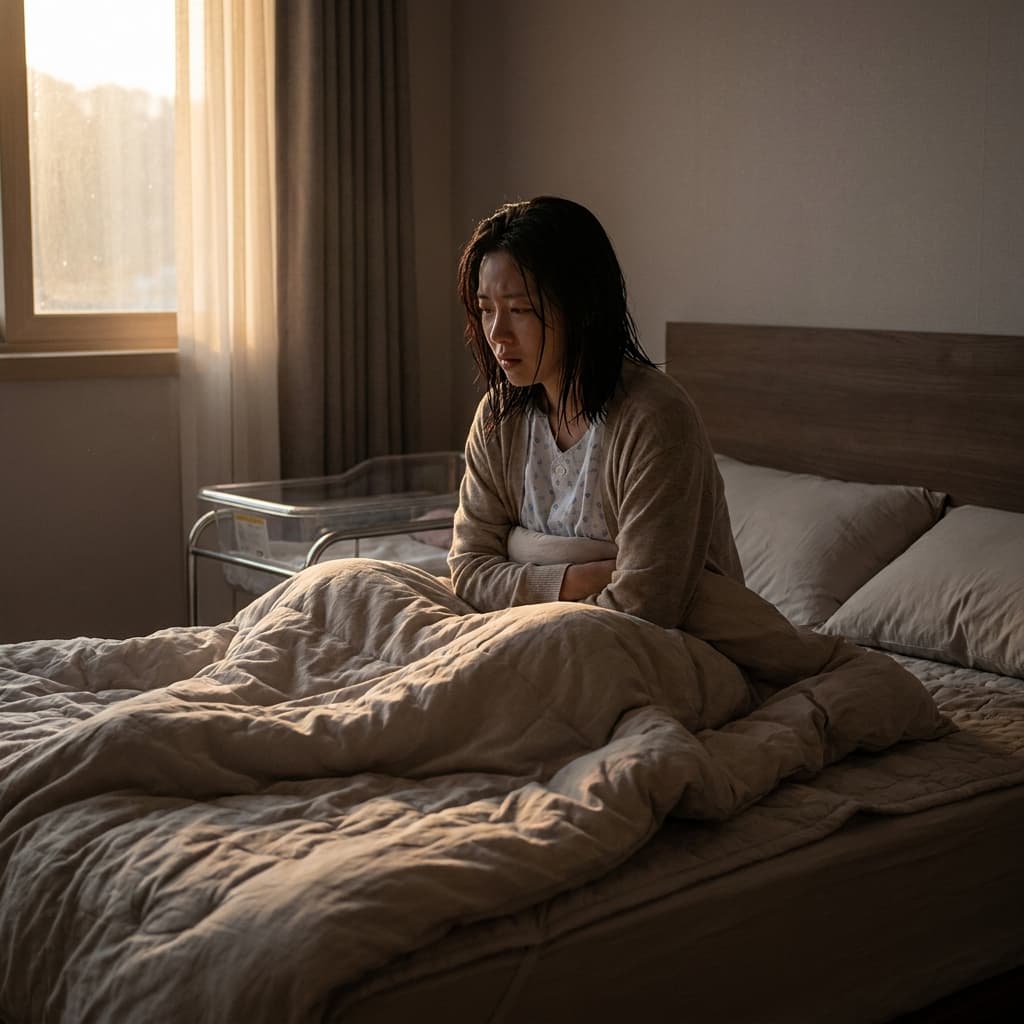
Are you experiencing a sensation of chills throughout your body, night sweats, and a lack of energy instead of the expected happiness after having a baby? Many mothers try to endure it, thinking "everyone is like that after giving birth," but this may not be simple postpartum fatigue; it could be 'Postpartum Wind' (Sanhupung). During the process of carrying and giving birth to a child, the body undergoes unimaginable changes and consumption, and if proper recovery does not occur, various aftereffects are likely to appear. In particular, painful symptoms such as chills in the joints and profuse sweating cause great difficulty in daily life and childcare, making the mother's body and mind even more tired.
💡 [Key Answer] The three most common causes of Postpartum Wind, which causes chills and night sweats after childbirth: ① Rapid consumption of Qi and Blood and stagnation of Blood Stasis during the birth process ② Autonomic nervous system imbalance and hormonal changes ③ Weakened immunity and impaired body temperature regulation Dalimchae Korean Medicine Clinic helps fundamental recovery by restoring the balance of the body through a 'Constitutional Improvement' treatment approach.
Why do chills and night sweats occur after childbirth, causing Postpartum Wind?
Childbirth has a profound impact on a woman's body. In particular, a large amount of blood and fluids are consumed during the delivery process, and joints and ligaments throughout the body weaken due to the secretion of relaxin hormone, which relaxes joints. Along with these physical changes, around-the-clock childcare, housework, lack of sleep, and nutritional imbalance hinder the body's recovery and cause a complex syndrome called 'Postpartum Wind' (産後風). While Postpartum Wind is not clearly defined in Western medicine, in Korean medicine, it refers to a state where Qi and Blood become weak and fluids are insufficient after childbirth, making the body easily invaded by 'Pathogenic Factors' (Sagi). In particular, if exposed to cold air or engaged in excessive activity, various symptoms such as joint chills, pain, night sweats, and shivering can appear throughout the body.
One of the main causes of Postpartum Wind is an imbalance in the autonomic nervous system. Rapid hormonal changes and stress after childbirth break the harmony between the sympathetic and parasympathetic nervous systems, leading to abnormal body temperature regulation, excessive sweating, insomnia, and depression. In addition, damage to Qi and Blood and the stagnation of Blood Stasis (Eohyeol) caused by childbirth hinder blood circulation and lead to weakened immunity, making the body even more frail. At Dalimchae Korean Medicine Clinic in Songdo, we in-depthly identify these complex causes of Postpartum Wind and provide treatment that helps fundamental recovery.
Are there research results showing that Korean medicine treatment is effective for Postpartum Wind?
Yes, the effectiveness of Korean medicine treatment for Postpartum Wind and postpartum symptom management is being confirmed through various clinical studies at home and abroad.
In a qualitative study by Dr. Ju-hee Seo's research team at the National Medical Center, published in the International Journal of Environmental Research and Public Health in 2022, in-depth interviews were conducted with eight mothers who received Korean medicine-based postpartum health care. The results showed that although the mothers participated in Korean medicine postpartum care with vague expectations, they felt improvement in uncomfortable postpartum wind symptoms (lochia discharge, pain and coldness, lack of energy, night sweats, indigestion, etc.) over time. In particular, they experienced the effectiveness of Korean medicine postpartum care in four areas: 'body becoming warm and energy being reinforced,' 'reduction in pain and coldness,' and 'return of appetite and comfort in the stomach.' It was found that they gained psychological stability through medical consultations with Korean medicine doctors. Through this, the researchers concluded that Korean medicine treatment is effective and suitable for postpartum wind symptom management and postpartum care.
In addition, in the "Study on the Development and Application of Korean Medicine Standard Clinical Pathway for Postpartum Wind" conducted by Hwang Su-in's research team at Pusan National University in 2015, the results of applying Korean medicine treatment (herbal medicine, acupuncture, pharmacopuncture, physical therapy, etc.) according to the Korean medicine standard clinical pathway for four weeks to 30 postpartum wind patients were announced. The results confirmed statistically significant improvement in local muscle pain (neck), local joint pain (fingers, wrists, shoulders, back, pelvis, knees, ankles), systemic and local coldness, fatigue, sweating (night sweats), and dizziness when comparing the initial examination and four weeks later (p<0.05). In addition, statistically significant improvements were shown in the Edinburgh Postpartum Depression Scale (EPDS) score and quality of life indicators (EQ-5D-3L anxiety/depression area score, index score). This study is important evidence objectively showing that Korean medicine treatment can improve not only various physical symptoms of postpartum wind but also psychological difficulties.
These research results suggest that active Korean medicine intervention can significantly contribute to the physical and mental recovery of mothers, beyond simply resting the weakened body after childbirth. At Dalimchae Korean Medicine Clinic in Songdo, we provide customized postpartum wind treatment tailored to each mother's symptoms and constitution based on these scientific grounds.
How can I find a healthy body again after Postpartum Wind?
The key to treating Postpartum Wind is to go beyond simply suppressing the symptoms that appear and restore the balance of the body that was disrupted by childbirth so that it can recover on its own. Dalimchae Korean Medicine Clinic's 'Constitutional Improvement' treatment principle focuses on exactly this. The goal is to create a healthy body where symptoms do not turn back on, rather than just temporarily turning off symptoms, by raising the body's immunity and self-healing power.
After childbirth, Qi and Blood are insufficient and Blood Stasis is stagnant, so blood circulation is not smooth, leading to symptoms such as chills, numbness throughout the body, and night sweats. At Dalimchae Korean Medicine Clinic, we primarily prescribe herbal medicine that removes Blood Stasis and replenishes Qi and Blood to promote circulation in the body. In addition, we strengthen the functions of the weakened five viscera and six bowels according to individual constitution and symptoms, and restore the balance of the autonomic nerves to recover body temperature regulation ability and control excessive sweating. Oriental medical treatments such as acupuncture, moxibustion, and pharmacopuncture are effective in improving blood circulation, relieving pain, and helping the recovery of damaged ligaments and joints. Through this complex treatment, we discharge waste products accumulated deep in the body and raise weakened immunity to create a sturdy body that is not shaken by external stimuli. Mothers in the Incheon Songdo area can also start constitutional improvement for a healthy body without postpartum wind at Dalimchae Korean Medicine Clinic.
Postpartum Wind Self-Checklist: Could I also have Postpartum Wind?
If three or more of the following items apply, it is recommended to suspect Postpartum Wind and receive a consultation from a specialist.
- After giving birth, my joints feel chilly, throb, or ache.
- Joint pain worsens when exposed to air conditioning or cold water.
- I sweat a lot at night while sleeping, or sweat profusely even during the day.
- I feel extremely tired and lack the energy to move.
- I feel depressed, anxious, and irritable for no particular reason.
- Indigestion occurs, I have no appetite, and my stomach feels bloated.
- My head feels heavy or I often feel dizzy.
- My hands and feet are cold and numb, getting worse in the evening.
- I am losing much more hair than before childbirth.
3 or more items apply → Suspect Postpartum Wind → Consider Korean medicine complex treatment 5 or more items apply → Immediate visit recommended
Q. Can Postpartum Wind heal naturally? A. Since the main causes of Postpartum Wind are Qi and Blood damage and physical imbalance due to childbirth, it is difficult to heal on its own simply by the passage of time. Rather, if left untreated, it can become chronic and lead to larger problems such as chronic pain or postpartum depression.
Q. How long does Postpartum Wind treatment take? A. The duration of treatment for Postpartum Wind varies depending on the individual's constitution, the severity of symptoms, and the time of onset. Generally, starting treatment in the early stages of symptom occurrence leads to faster recovery, and consistent treatment and management are important. At Dalimchae Korean Medicine Clinic, we help efficient recovery through personalized treatment plans.
Q. Can I take herbal medicine while breastfeeding? A. Yes, Korean medicine doctors carefully prescribe it, considering each mother's constitution and condition so that even breastfeeding mothers can take it with peace of mind. Dalimchae's herbal medicine consists of medicinal herbs that help the mother's recovery without interfering with breastfeeding.
Postpartum Wind, which causes chills throughout the body and night sweats after giving birth, is not a problem that can be solved by enduring it. You no longer have to ignore the signals your body has been sending for a long time. If approached in the right direction, the body reacts faster than you think. Bring the symptoms you are experiencing as they are. At Dalimchae Korean Medicine Clinic in Songdo, we will find the cause together and help you regain your vibrant daily life.
Where life blooms. For herbal medicine, it's Dalimchae. Check your symptoms similar to mine through the AI consultation on the Dalimchae Korean Medicine Clinic website first!
This post is health information compiled by the Dalimchae medical staff based on questions actually received in the consultation room. Medical Supervision | Brain/Autonomic Nerve Treatment Standard, Dalimchae Korean Medicine Clinic Songdo Branch, Korean Medicine Doctor Oh Hyunmin (Postpartum Wind Column)