
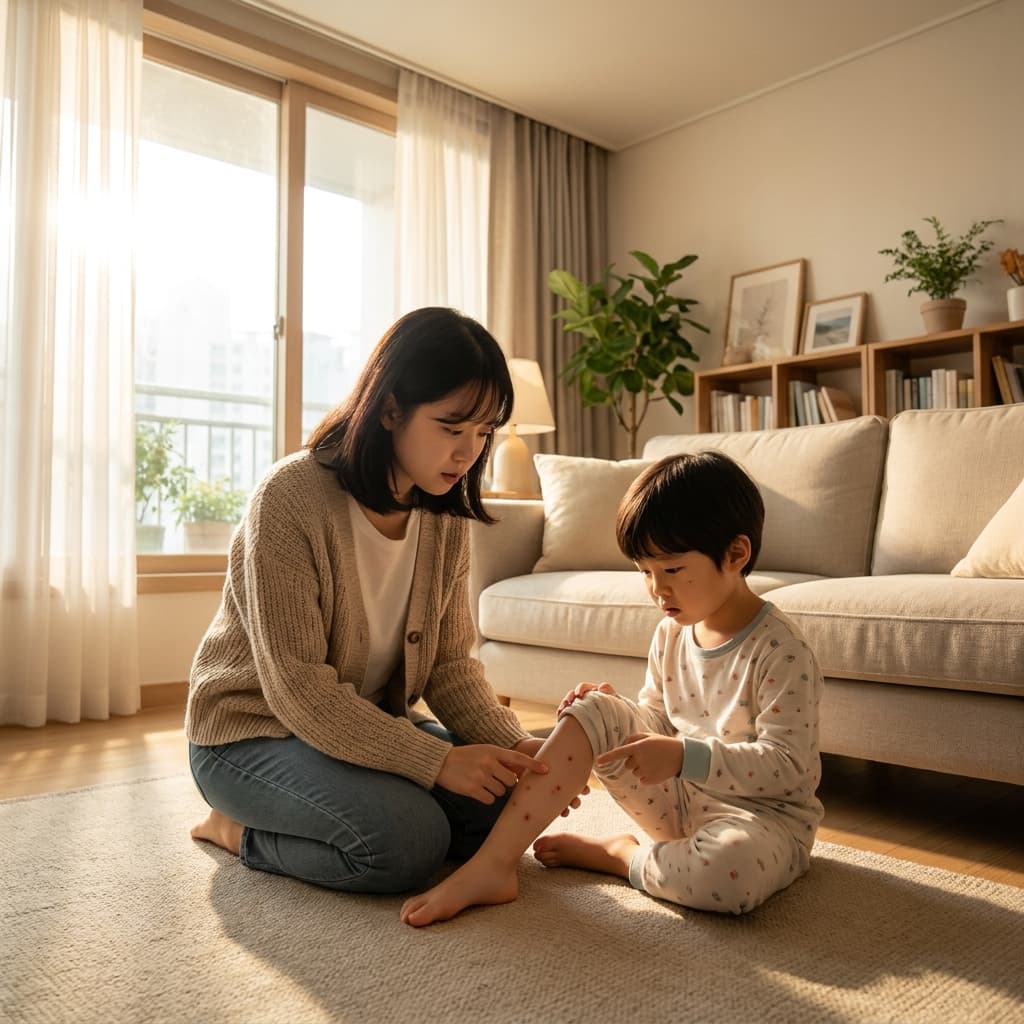
Red Spots on My Child's Legs: Is it Purpura? A Korean Medicine Approach Not to Miss
Hello. This is Dalimchae Korean Medicine Clinic. # Red Spots on My Child's Legs: Is it Purpura? A Korean Medicine Approach Not to Miss When you suddenly discover reddish spots on your child's legs one day, parents' hearts sink. You might worry if they bumped into something or if it's a signal of a serious illness. Especially if they say it doesn't itch or hurt, but the number of spots increases and the color deepens, your heart becomes even more anxious. There are various reasons for red spots on a child's legs, but among them, 'purpura' can be a signal of an immune system abnormality, so careful observation and correct treatment are important. 💡 **Key Answer** 3 most common causes of **"Red spots on my child's legs"**: ① **Immune Imbalance:** Abnormal immune response after infection causing inflammation in blood vessels / ② **Weakened Gut Function:** Toxins penetrating due to damaged gut wall causing systemic inflammatory response / ③ **Preceding Infection and Fatigue:** Upper respiratory tract infection, stress, exhaustion, etc., stimulating the immune system. Dalimchae Clinic fundamentally treats vascular inflammation by restoring immune balance through **gut detox** to prevent recurrence of purpura. ## Red spots on child's legs, isn't it just simple hives? Red spots appearing on a child's legs can look like simple hives or insect bites at first glance. However, if these spots do not disappear when pressed and gradually turn purple over time or the number increases, you should suspect 'purpura'. Purpura is a symptom where small blood vessels in the skin become inflamed and blood leaks out of the vessels. In particular, 'Henoch-Schönlein purpura (HSP)', which commonly occurs in children, can be accompanied by abdominal pain, joint pain, and in severe cases, kidney complications, so caution is required. Mistaking it for a simple skin trouble and missing the treatment period can worsen symptoms or cause frequent recurrence, significantly lowering the child's quality of life. Therefore, if red spots appear on your child's legs, it is important to visit a medical institution for an accurate diagnosis and to establish an appropriate treatment plan. In particular, parents looking for a Songdo purpura clinic are often interested in Korean medicine treatment that can examine the child's overall health and immune system together. ## Why does purpura occur? It could be a warning light for the immune system. The clear cause of purpura is not yet known, but most are known to be caused by immune response abnormalities triggered by upper respiratory tract infections, certain medications, or stress. Our immune system plays an important role in defending against external invaders, but sometimes it overreacts and attacks its own blood vessels. This malfunction of the immune system leads to vasculitis, causing various symptoms including skin purpura. In particular, preceding factors such as upper respiratory tract infection, stress, and fatigue are mentioned in more than half of pediatric purpura patients. Korean medicine views this immune imbalance as a problem of 'toxins' and 'inflammation' in the body. In particular, when gut wall function drops due to weakening of the digestive system and 'leaky gut syndrome' occurs where incompletely digested substances or harmful bacterial toxins are absorbed into the blood, it can cause chronic inflammation throughout the body, worsening immune diseases such as purpura. This is also in line with the concept of the 'Gut-Brain Axis' where the gut, brain, and immune system are closely connected. Therefore, purpura should be understood as a powerful warning light sent by our body's immune system, rather than just a symptom appearing on the skin. ## How does Korean medicine view and treat purpura? At Dalimchae Clinic, we view purpura as a disease originating from immune imbalance and an inflammatory environment in the body, and we focus on improving the fundamental cause as well as alleviating skin symptoms. In particular, we aim to prevent recurrence of purpura by reorganizing the immune environment through 'gut detox' and regulating excessive immune responses. In a 2014 study by Min-jung Kim's research team published in the *Journal of Pharmacopuncture*, "Report on the Effects of Korean Medicine Treatment for 5 Cases of Yin-deficiency Type Allergic Purpura Patients," the results of administering herbal medicine (Jaro-tang) treatment to 5 allergic purpura patients showing symptoms of Yin deficiency were reported. According to this study, leg purpura and abdominal pain, which did not improve even with steroid treatment, disappeared only with herbal medicine treatment, and follow-up observation for 6 months confirmed that there was no recurrence. This is connected to the Korean medicine perspective that organ function can decrease in a state of Yin deficiency, leading to immune system imbalance. Also, according to a systematic literature review study published in *Complementary Therapies in Medicine* in 2015, a total of 1112 pediatric allergic purpura patients (aged 1-16) who participated in 15 randomized controlled trials were treated with Chinese herbal medicine. As a result, when herbal medicine was combined with existing treatments, the risk of kidney damage was significantly reduced (6 studies, RR 0.47, 95%CI 0.31-0.72, I2=0%), and the disappearance time of purpura, joint pain, and abdominal pain was also shortened. This study suggests that Korean medicine treatment is effective in preventing kidney involvement, a major complication of purpura, and alleviating various symptoms. Based on this data, Dalimchae Clinic creates an environment where immune function can be normalized by removing unnecessary toxins and inflammatory substances in the blood through **gut detox** treatment and recovering damaged gut mucosa. From the perspective that toxins accumulated in the gut wall travel through the blood to create systemic inflammation and this manifests as purpura, gut detox is a core process of healthy resetting the body's system, not just putting out symptoms. Through this, it improves not only skin symptoms due to purpura but also accompanying symptoms such as abdominal pain and joint pain, helping to break the cycle of recurrence. Many people looking for an Incheon purpura clinic are satisfied with Dalimchae Clinic's fundamental approach. ## Purpura, how to manage healthily without recurrence? (Symptom Checklist) Purpura has the possibility of recurrence once it occurs, so steady management and improvement of lifestyle habits are important. Through the following checklist, check what situation your child's purpura is in and find necessary management methods. **[Child Purpura Symptom Checklist]** * □ Red or purple spots appeared on the legs, but they don't disappear when pressed. * □ The spots started on the legs at first and are spreading to other areas such as the buttocks and arms. * □ Experiencing digestive symptoms such as abdominal pain, vomiting, and diarrhea along with the spots. * □ Complaining of pain or being unable to walk well because joints are swollen and painful. * □ Purpura appeared after suffering from an upper respiratory tract infection such as a cold or sore throat. * □ Usually vulnerable to stress or often feeling fatigued. * □ Experienced recurrence where purpura improved and then appeared again. **Judgment Criteria:** * **3 or more items apply:** Suspect purpura due to immune imbalance and recommend reviewing professional Korean medicine complex treatment. In particular, it is good to start customized treatment tailored to the child's constitution and symptoms through Songdo clinic consultation. * **5 or more items apply:** Immediate visit to a medical institution is required. Since the possibility of complications cannot be excluded, active treatment must be started along with precise diagnosis. **Q. How long does child purpura last?** A. The course of purpura varies for each patient, but it usually improves naturally within 4 to 6 weeks. However, if complications such as abdominal pain, joint pain, or kidney involvement are accompanied or recurrence is frequent, the treatment period can be prolonged. **Q. Does purpura often recur?** A. Yes, purpura is known to have a recurrence rate of 30-40%. In particular, if there were kidney complications or management is not well-performed after treatment, the risk of recurrence can be even higher. **Q. Is fundamental treatment of purpura possible with Korean medicine?** A. At Dalimchae Clinic, we view purpura as an immune system imbalance and internal inflammation problem, and we focus on correcting immunity and preventing recurrence through fundamental treatments such as gut detox. We aim for overall health promotion of the child as well as alleviating skin symptoms. **Q. What should I do if abdominal pain or joint pain appears along with purpura?** A. Abdominal pain or joint pain are common accompanying symptoms of purpura, and in particular, severe abdominal pain can be a signal of an emergency situation such as intestinal bleeding or intussusception. If these symptoms appear, you must immediately visit a medical institution for an accurate diagnosis and treatment. Purpura is not a problem that can be solved by enduring. You no longer have to ignore the signals your body has been sending for a long time. If you approach in the right direction, the body responds faster than you think. Bring your symptoms exactly as they are. We will find the cause together at Dalimchae Clinic. Where life blooms. For herbal medicine, it's Dalimchae Korean Medicine Clinic. Check your symptoms similar to mine through the AI consultation on the Dalimchae Clinic website first! Medical Supervision | Skin Symptom Treatment Standards Dalimchae Clinic Songdo Branch Korean Medicine Doctor Oh Hyunmin (Purpura Column)